Restore MS SQL Server Backup Files
With Managed Backup, you can restore Microsoft SQL Server backup files. This chapter covers the following topics:
Create a New Restore Plan
To create a new restore plan, proceed as follows:
- Open the Backup > Computers page in the main menu.
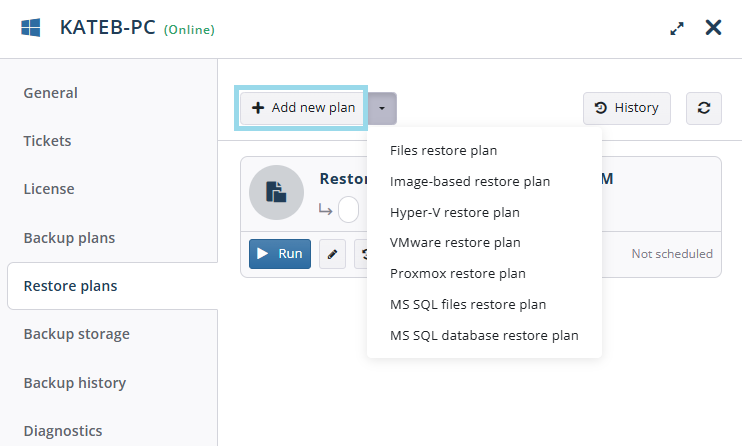
- Find the required computer, then click the Configure icon in the Backup Plan Status column. On the side panel, expand +Add new plan to select MS SQL files restore plan. The restore plan wizard starts.
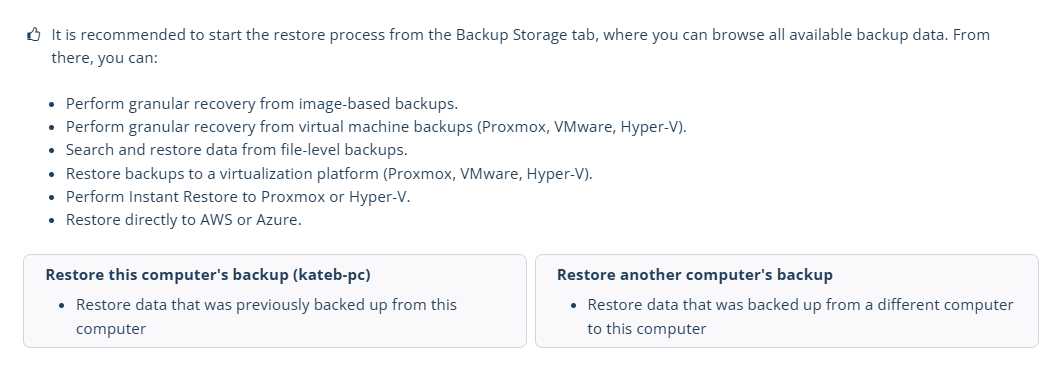
To simplify the restore process, click +Add new plan and select a restore option from the backup storage browser for this or another computer. You will be redirected to the backup storage browser to find the required backup and configure the restore options.
Step 4
The first step when creating a new MS SQL restore plan is to decide whether to run it a single time immediately after plan creation or give it a name and save it for later.
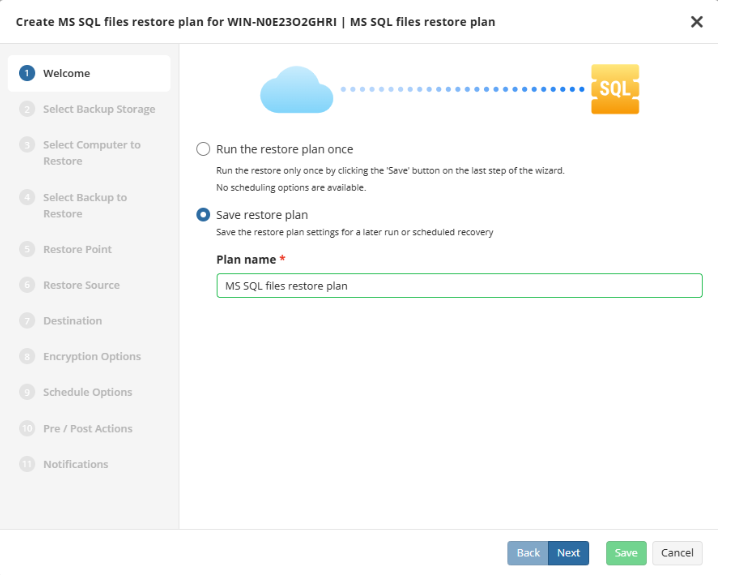
Run restore once will execute the restore immediately upon completing the wizard.
Save restore plan will allow you to schedule the plan to run at a later time and also schedule repeating restore operations, if needed.
It is recommended to use a descriptive name that will distinguish the plan from others.
Step 5 (optional)
This step is skipped if you use the backup storage browser to create the plan.
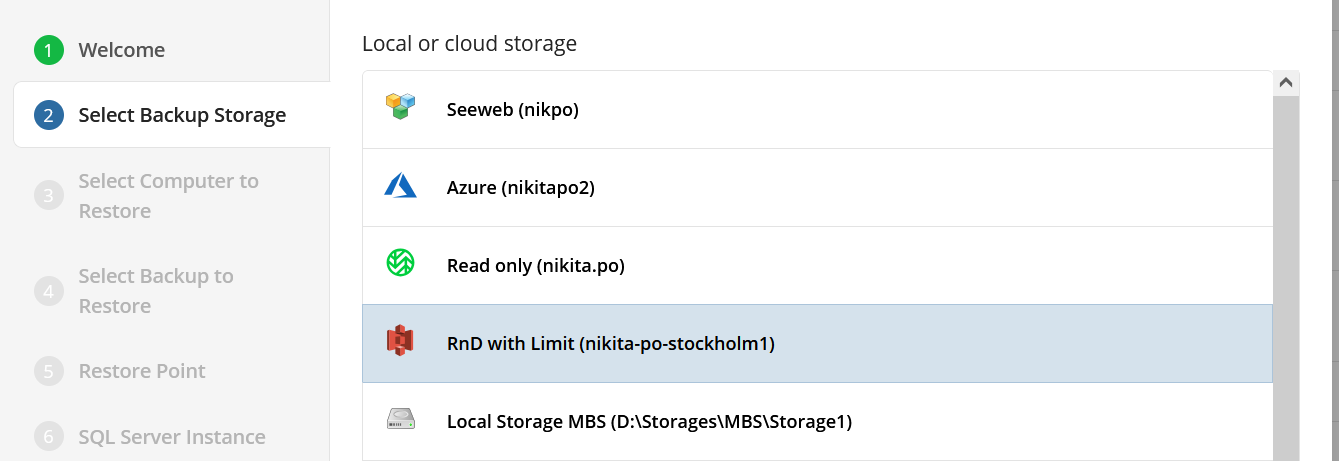
Select the storage that contains the desired data.
Step 6 (optional)
This step is skipped if you use the backup storage browser to create the plan.
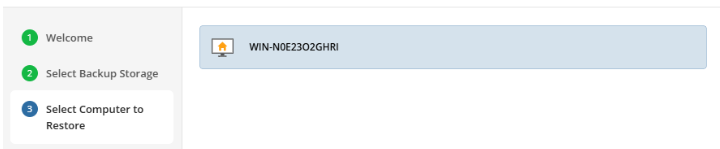
With the backup storage selected, the next step is to select the computer associated with the backup that you would like to restore.
Step 7 (optional)
This step is skipped if you use the backup storage browser to create the plan.
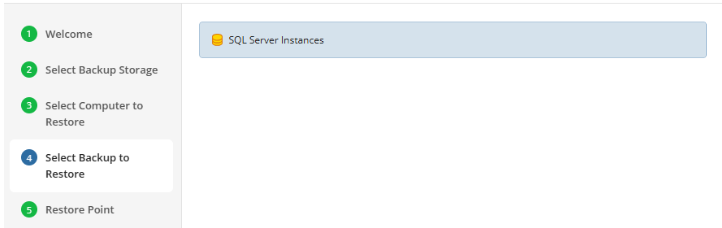
You will be presented with a list of available backup types for the selected host. Select the “SQL Server Instances” option to continue.
Step 8
The next step is to select the desired point in time to restore to.
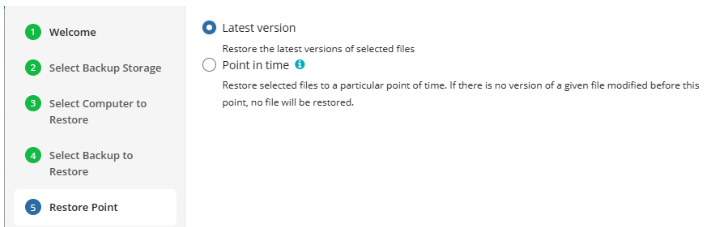
If there is no exact match for the point in time selected, the application will automatically select the closest previous restore point.
Step 9
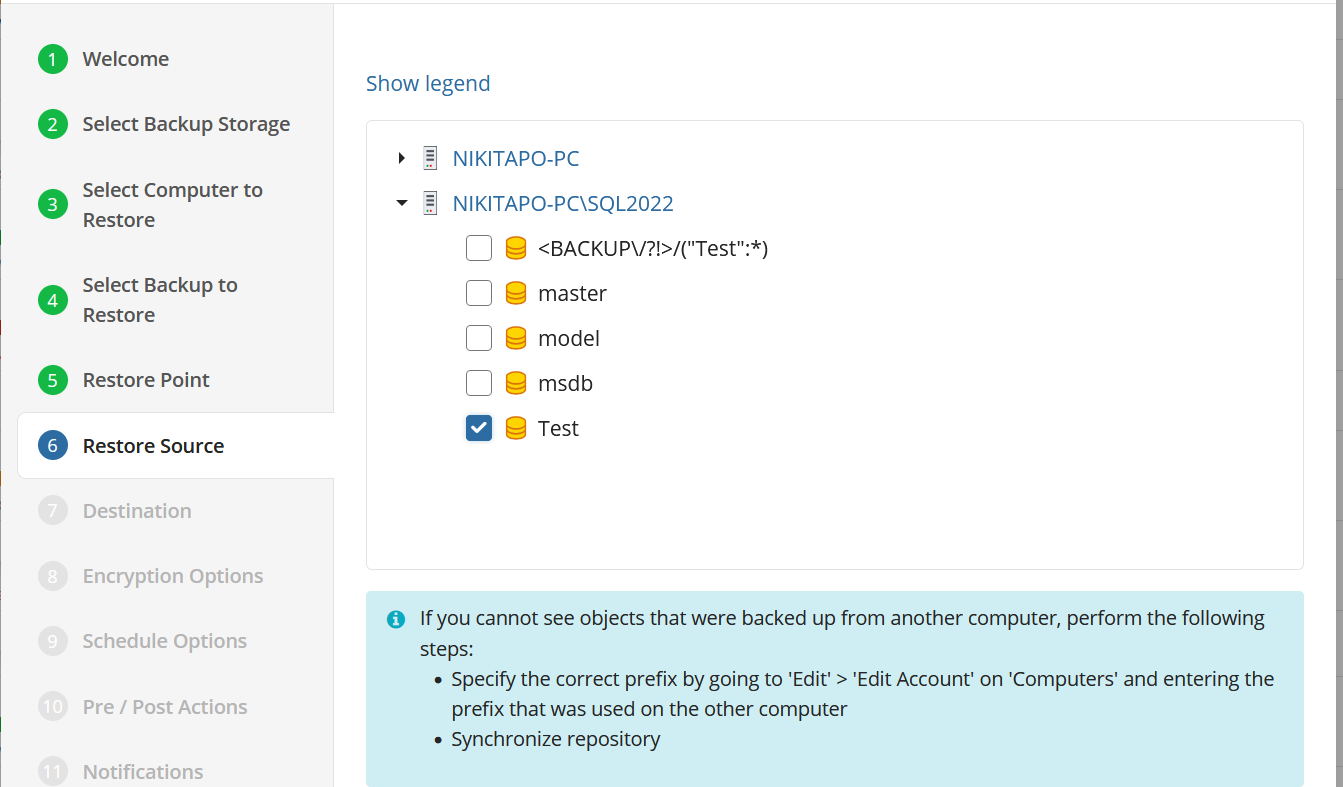
Next, select which database to restore.
Step 10
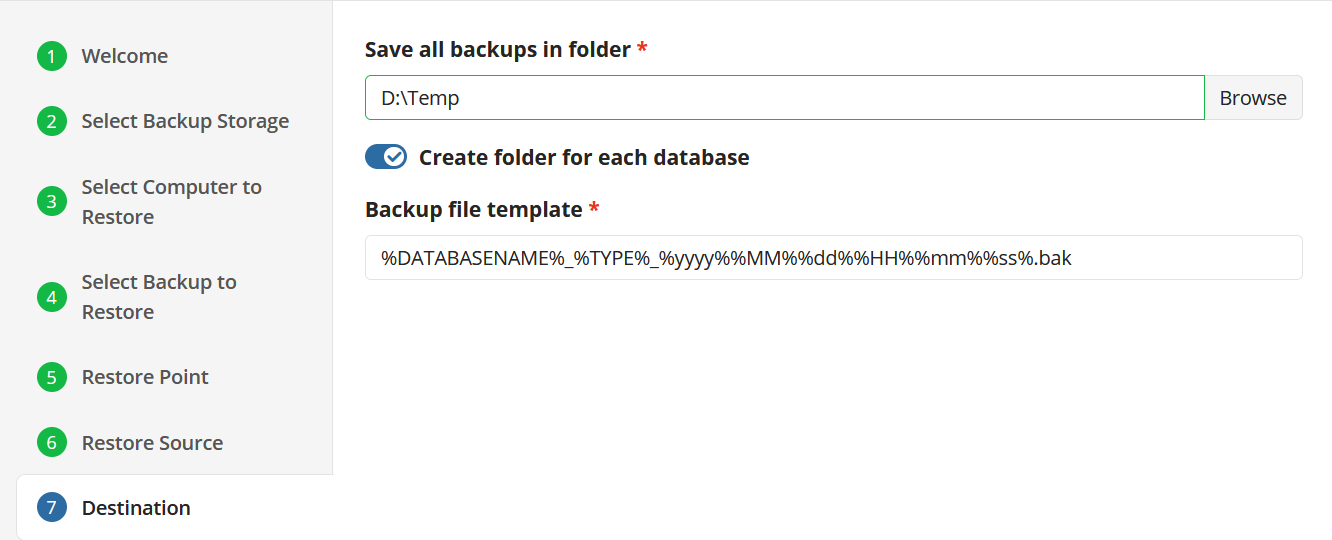
The next step asks you to provide the paths the database files will be restored to, and you will be given options to overwrite an existing database or restore the database with a new name.
Step 11
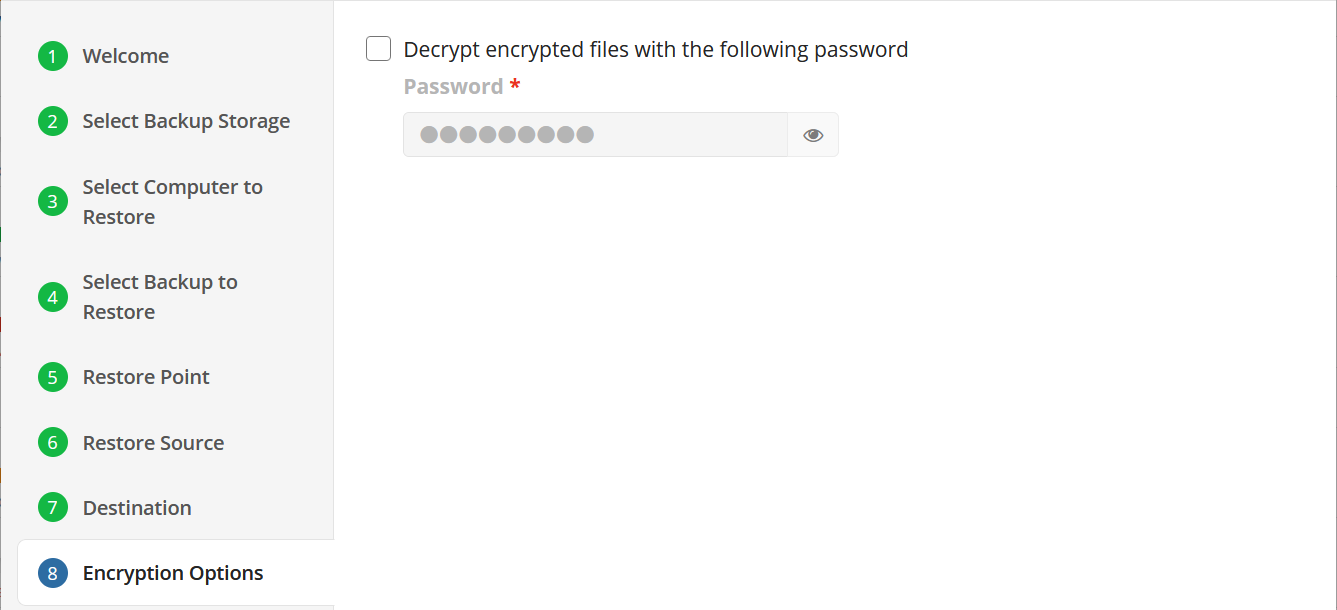
If the backed-up data was encrypted, the next step will be to enter the password for decryption. If the password is incorrect or missing, the restore plan will fail, and you will need to edit the plan to input the correct password.
Step 12
If you opted to save the restore plan, the next step is to specify how the plan should be triggered.
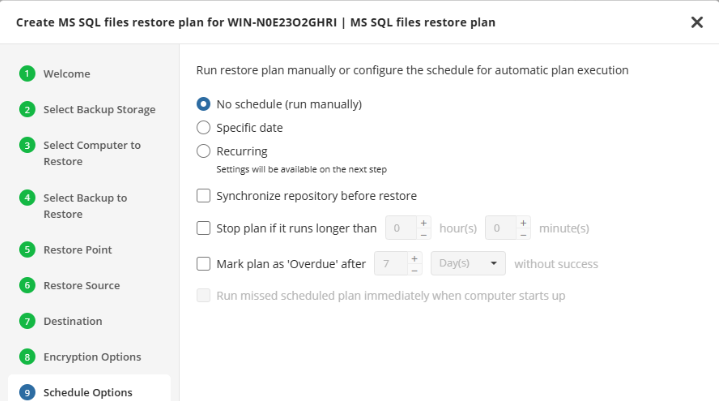
- No schedule (run manually): Use this option only when you wish to execute the restore manually.
- Specific date: Use this to schedule a one-time restore at the specified date and time.
- Recurring: This option enables you to schedule recurring restore operations based on the criteria in the following step.
Glacier Smart Restore (optional)
If you restore data from the S3 Glacier Flexible Retrieval or Glacier Deep Archive storage classes, specify Smart Restore options.
Step 13
With Recurring selected on the previous step, you are then prompted to define the time and frequency of the plan execution.
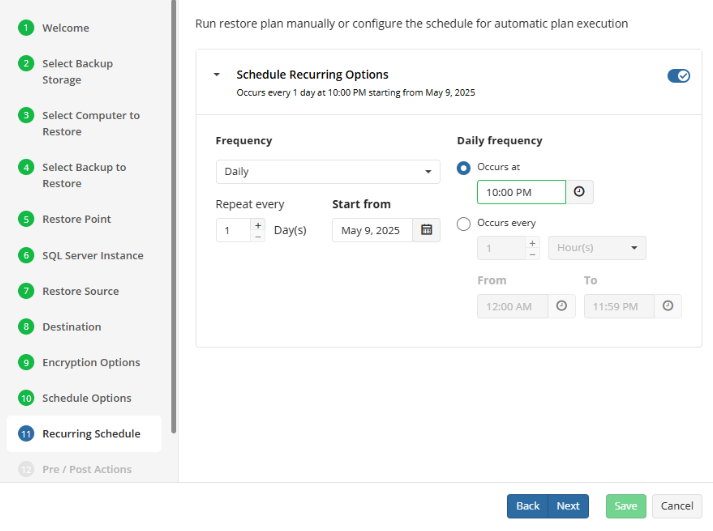
In addition to scheduling the restore, other options are available regarding notification and management of long-running or missed plans.
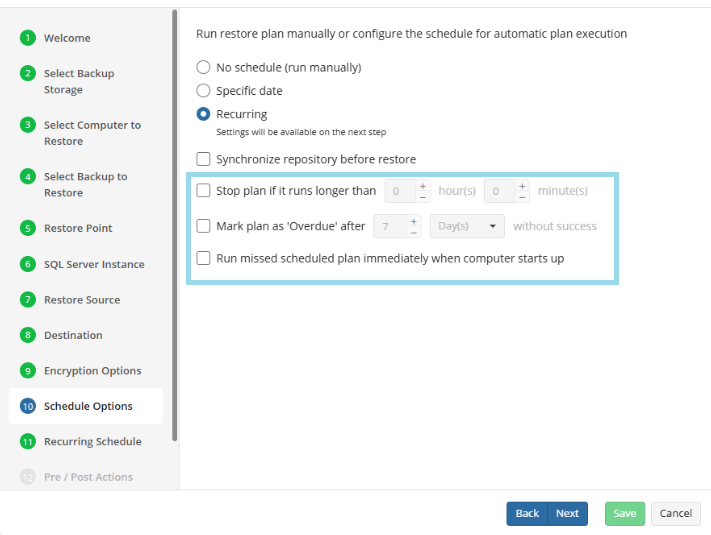
Do not use the “Stop the plan if it runs for:” option if you have a slow or unstable internet connection.
Enabling the “Run missed scheduled restore immediately when computer starts up” option will ensure that the restore plan will begin automatically after the computer starts up if it was unable to run at the scheduled time. This is only recommended for desktops and laptops. For servers, it is recommended that you run the restore plan manually when all maintenance work is completed to avoid adversely affecting server performance and internet bandwidth during working hours.
Step 14
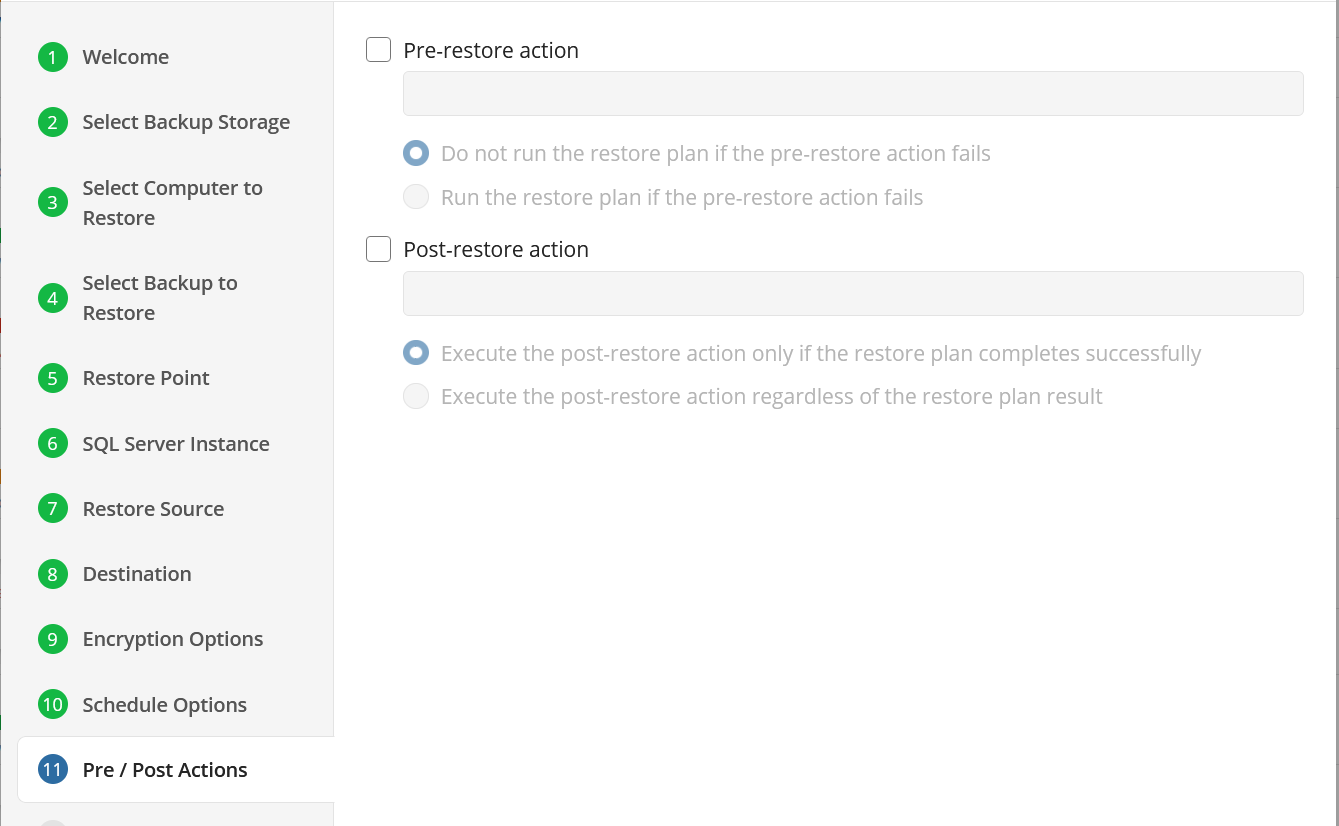
The Pre/Post Actions page allows the execution of custom scripts before and/or after the restore task runs.
Step 15
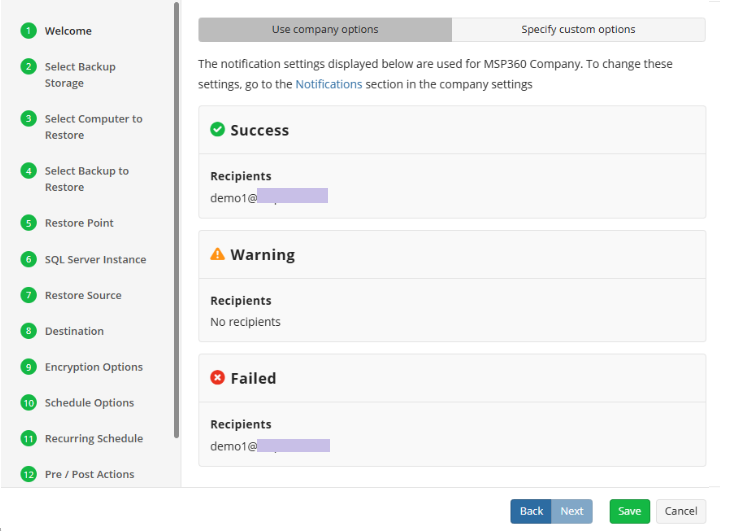
The final step is to review the notification settings. The settings applied at the company level are selected by default; however, you can also specify custom options per plan.
Step 16
Click Save when you are happy with your selections. If the plan is set to run only a single time and has no set schedule, it will automatically start. Otherwise, if it is set to run only once and is scheduled, it will display in the list of plans until the scheduled time. If it is only set to run once, when it completes successfully, it will remove itself from the list of plans. Only restore plans that are saved will remain in the list for future use.
| Top |
Run the Restore Plan
To run the restore plan, proceed as follows:
- Open the Backup > Computers page in the main menu.
- Find the required computer, then click the Configure icon in the Backup Plan Status column.
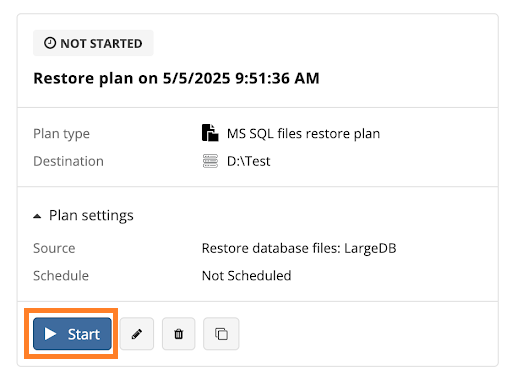
- On the side panel, click the Start button.
| Top |
Edit the Restore Plan
To edit the restore plan, proceed as follows:
- Open the Backup > Computers page in the main menu.
- Find the required computer, then click the Configure icon in the Backup Plan Status column.
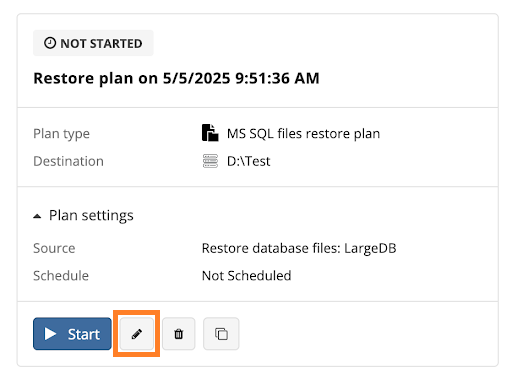
- On the side panel, click the Edit icon below the backup plan tile.
- Make the required changes, then click Save.
| Top |
Delete the Restore Plan
To delete the restore plan, proceed as follows:
- Open the Backup > Computers page in the main menu.
- Find the required computer, then click the Configure icon in the Backup Plan Status column.
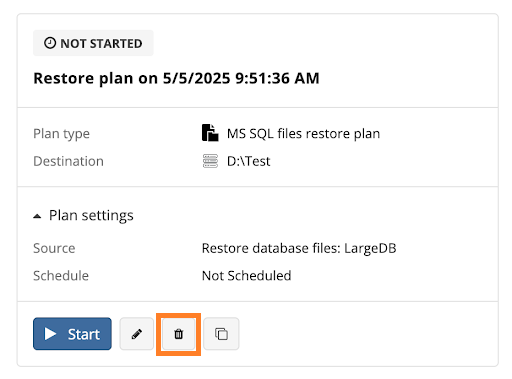
- On the side panel, click the Delete icon below the backup plan tile.
- Confirm the plan deletion.
| Top |