Add Computer for Image-Based Backup
This chapter describes the first steps for Managed Backup beginners. Read it to add your first computer and create your first image-based backup:
- Sign Into Management Console.
- Add a Computer.
- Authorize the Computer.
- Configure Email Service (optional).
- Create First Image-Based Backup.
1. Log In to Management Console
Once you have signed up for a free trial, check your inbox for an email message with instructions on how to log in to the Management Console. This email has the You’ve signed up for MSP360 Managed Backup subject and contains your initial password.
Click the link in the email to access the Management Console.
To add a computer, proceed as follows:
- Open the Management Console as a provider or an administrator who can manage the company that will contain the computer or all companies.
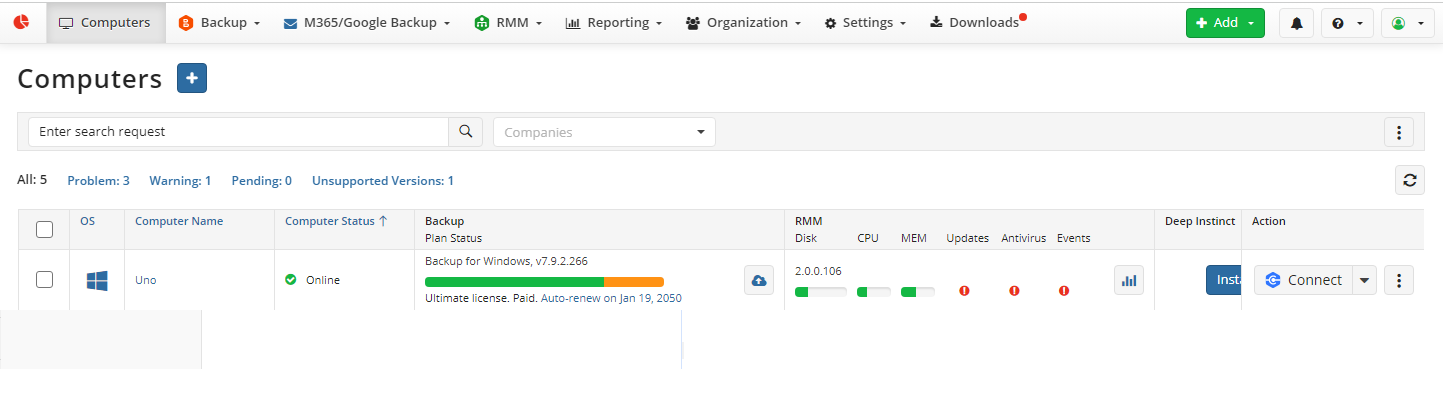
- On the Computers page, click +.
Proceed with the Add Computer wizard as described below.
Prepare Configuration to Add Computer
- On the Pre-Configuration step, select the MSP360 product to install on the computer. Later, you can add other products if you want.
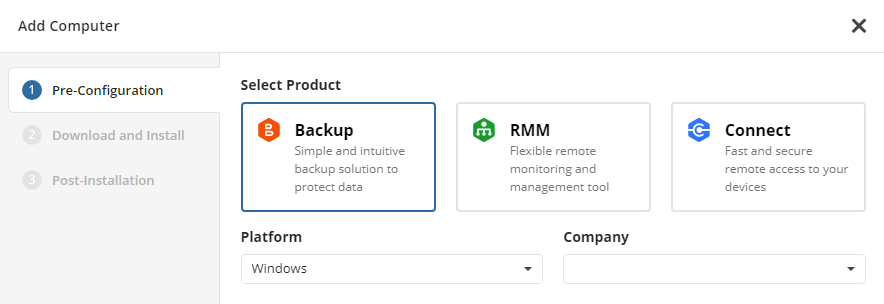
- Select the operating system of the computer.
- Select the company you are planning to add this computer to. Expand the Company to select one of the existing companies or to create a new one. To add an existing company, click the company name.
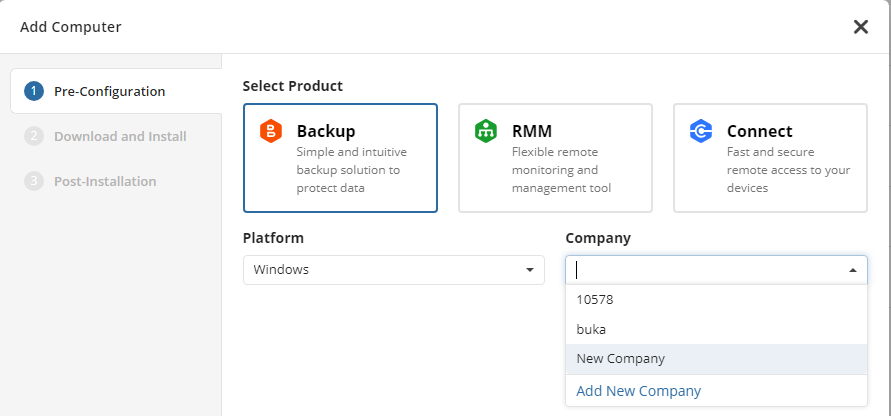
To create a new company, click Add New Company and specify the new company name. You can configure your new company later as described in Companies.
- Click Next to select the installation method.
Select Installation Method to Add Computer
On this step, you can select the installation method. You can download and install the package manually with Download and install manually or use the beta version of the Discover and Deploy tool with Scan network and install agents on bulk.
Download and install manually
- Select the package to install on the computer. In case there are no generated builds, click Generate next to the build you are going to install. Wait while the build is generated for you. By default, the public build is suggested for installation. You can see the newest version of the product and make it public with the Make Public button. As soon as the newest version becomes public, it will be available to all users. If you already have generated builds and the Enable Sandbox option for the download panel is enabled, you can add the newest version to your sandbox to test it before making it public. To add the newest version to the sandbox, click the Make Sandbox button.
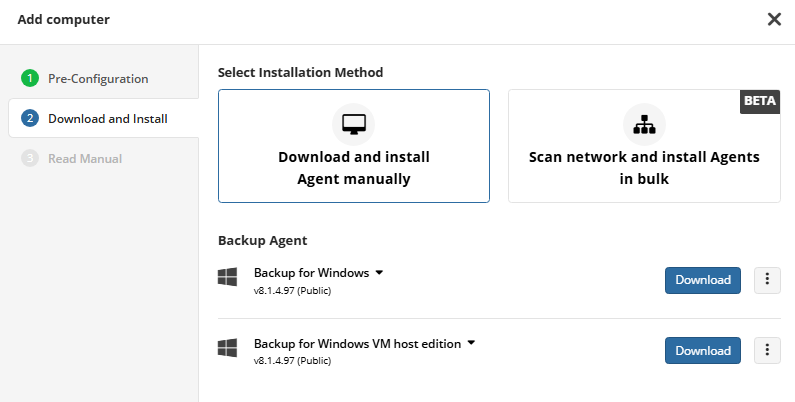
You can copy the installation script to execute it on the added computer or copy the download link. To perform these operations, use the actions next to the Download button.
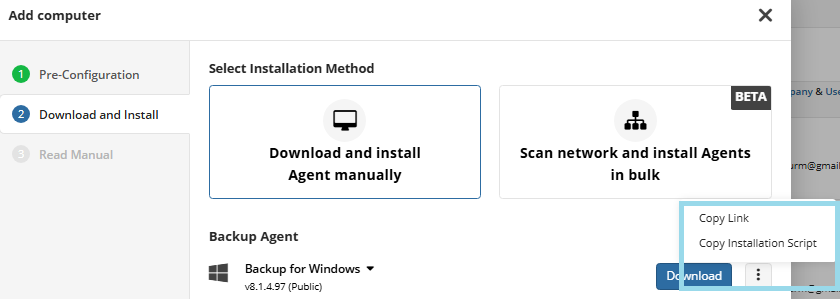
- Download and install the package on the target computer. To perform these operations, use the actions next to the Download button. To install the package using the script, run PowerShell with administrator rights on the target computer, then execute the copied script. This computer, except for computers that are already included in another company, will be included in the specified company. If the installation script is executed on a computer that is already included in another company, the Agent will be installed, but the original company will remain unchanged.
- Click Next. On the Post Installation step, you will see instructions on how to complete the procedure.
Note that in some cases, you will need to refresh the Computers page to see the new computers. Use the Pending filter to quickly find added but not yet authorized computers. You should authorize the computer before you can manage it. Close the wizard if all required builds are downloaded. The Backup Agent must be installed in the default location.
3. Authorize Computer
You need to authorize the computer to associate the customer’s computer with the newly installed Agent.
Once the selected Agent is installed on the computer, refresh the Computers page to see the new computers. Use the Pending filter to quickly find computers that have been added but are not yet authorized.
- In the Computers grid, find the computer. In the Company & User Account column, click Authorize or click Pending next to the computer name.

- Select an existing company or create a new one to add the computer to. If you create a new company, you can configure it later. For now, you only set a name for the new company.
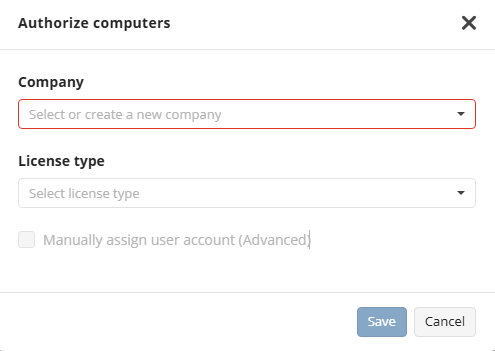
You can manually associate the computer with the user.
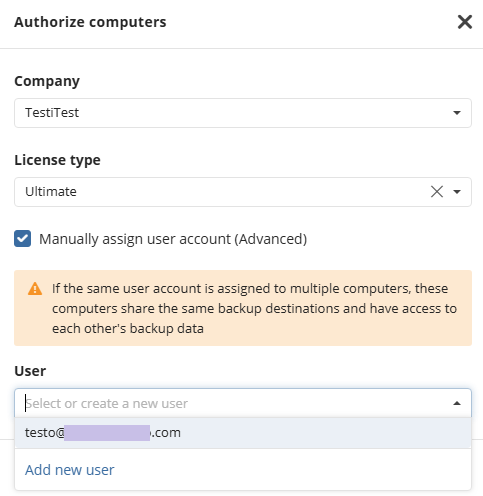
If the user is not already added, select Add new user. If you are using backup, it is recommended to add real users to avoid any inconsistency. Users created automatically can be used for RMM and Connect Agents.
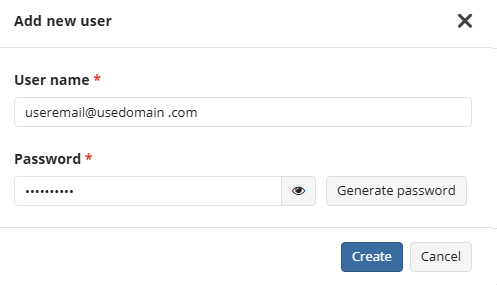
Save the provided data. The new user will be added and enabled by default.

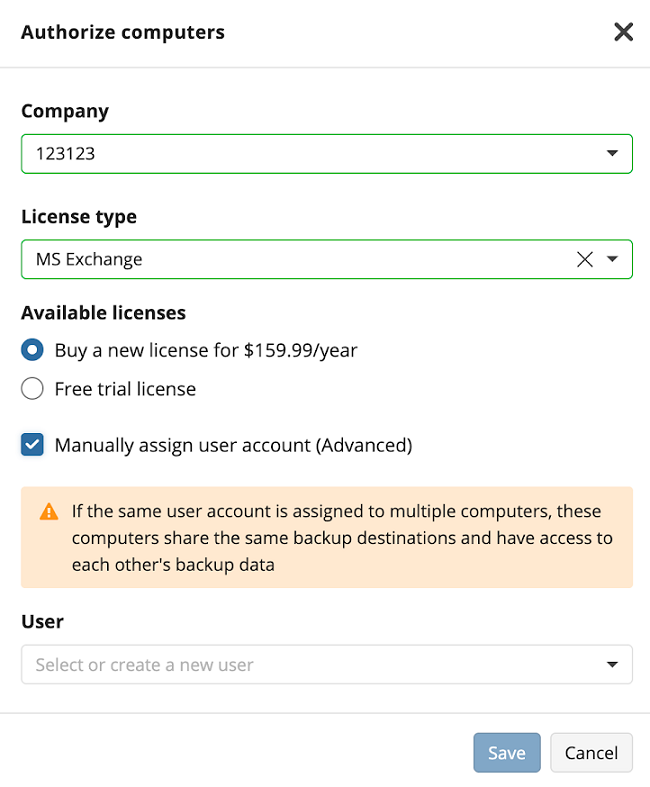
It is not recommended to use the provider account for backup purposes. Note that if the same account is assigned to multiple computers, these computers will share the same backup destinations, and backup data access will also be shared between these computers.
If you want to select an existing user, the selected user should be enabled and included in the selected company. Check the user status on the Organization > Users page.
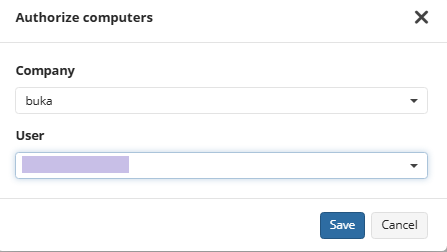
If this is the first authorization after installing the Backup Agent, you can set the license type for the Backup Agent to use on this computer.
4. Configure Email Service
By default, when you add your first computer, Email Service is configured as follows:
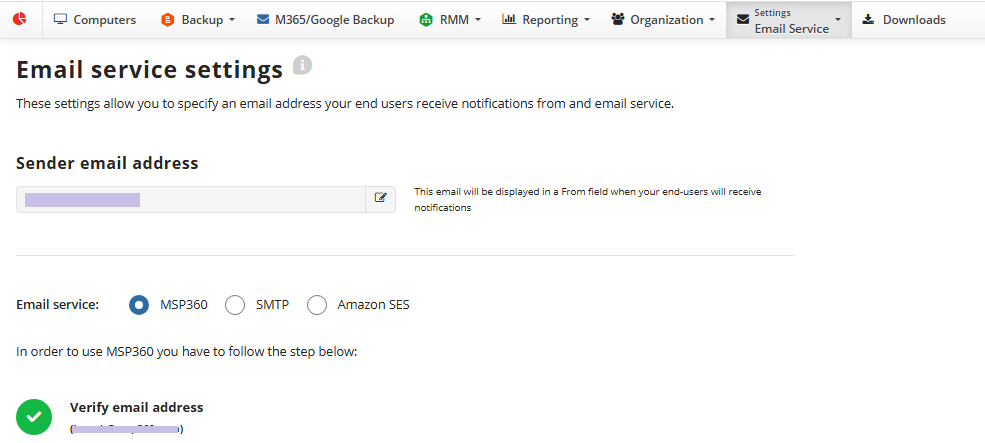
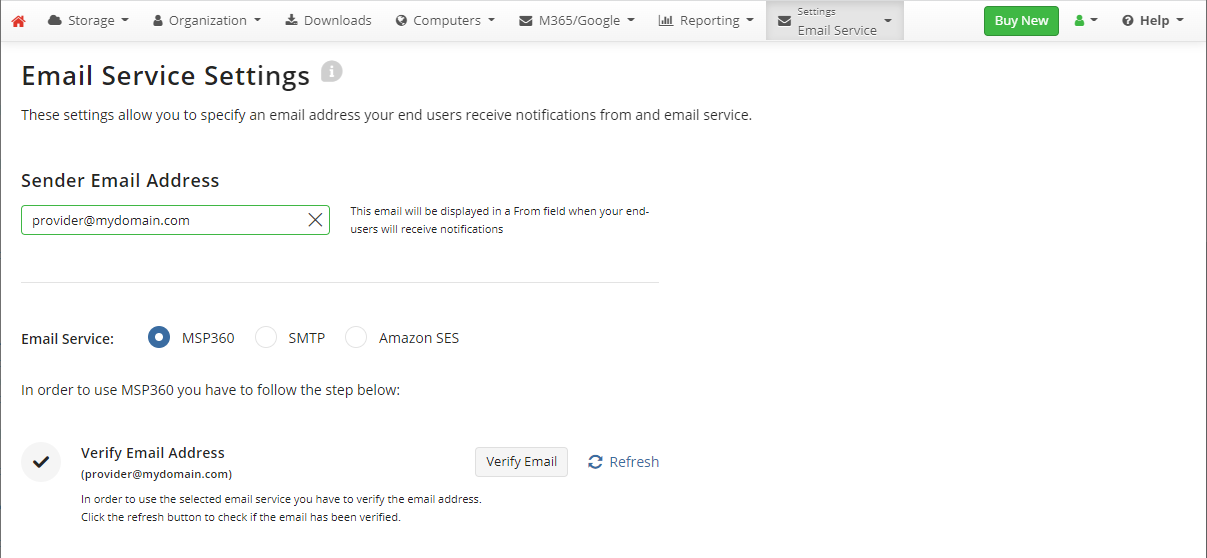
If these default settings do not match your requirements, you need to configure the Email Service. In the Management Console, navigate to Settings > Email Service to specify an email address your end users receive notifications from and select the email service. This step is mandatory.
Verify the email address and click Save Changes.
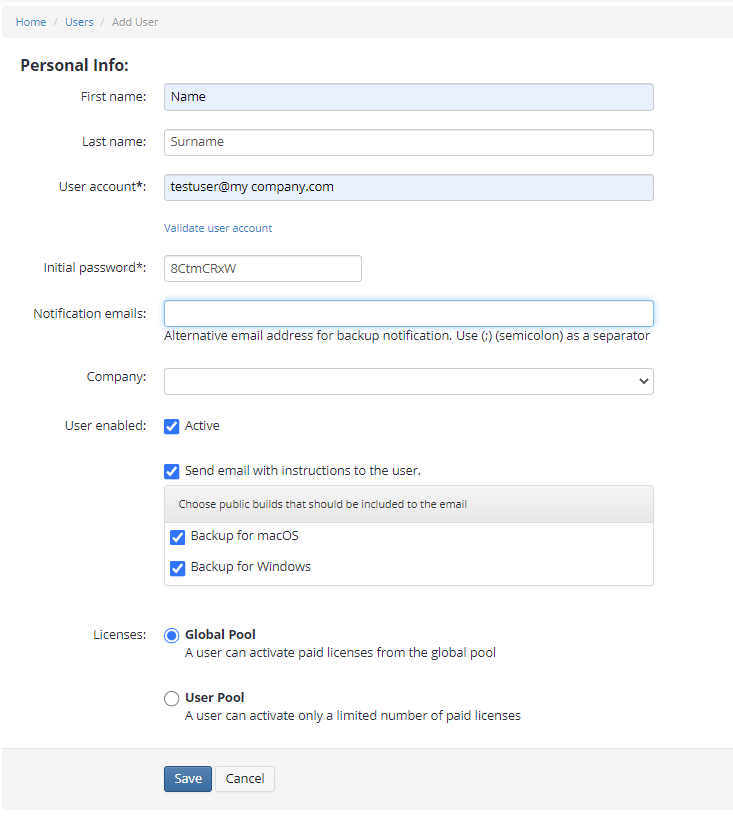
- Fill in the form. In the Public builds that should be included in email group, select the required Backup Agent installation packages. You can assign the new user to the company (read about company creation in the Create Company paragraph), or create a new company with another backup destination, if necessary.
- Once you are done, click Save.
Create Image-Based Backup
Once you are done, proceed to create a new image-based backup.